

Synopsis
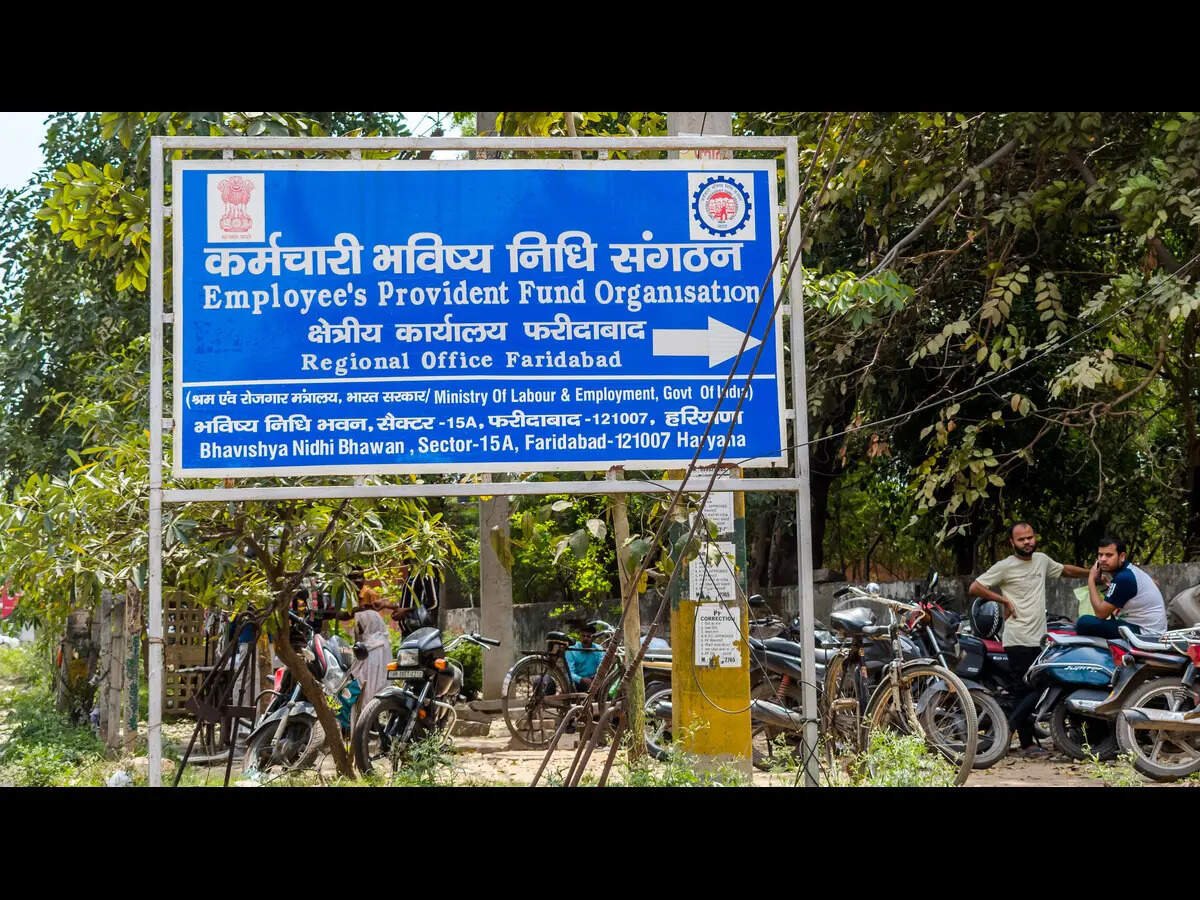
A retired employee received relief from the Telangana High Court. The Employees' Provident Fund Organisation had demanded Rs 2.5 crore PF money back. The court ruled the Employees' Provident Fund Organisation cannot recover funds from the employee. The Employees' Provident Fund Organisation may pursue legal action against the company and its PF trust.Listen to this article in summarized format
ListenIncome Tax Guidehttps://economictimes.indiatimes.com/wealth/tax/income-tax-union-budget-2026-live-updates-standard-deduction-hike-income-tax-slab-changes-nirmala-sitharaman-tax-relief-feb-1/liveblog/127830262.cms" target="_blank" rel="noopener noreferrer" class="jsx-4c5e669dbf51d11d">Income Tax Union Budget FY 2026-27 Livehttps://economictimes.indiatimes.com/wealth/income-tax-slabs" target="_blank" rel="noopener noreferrer" class="jsx-4c5e669dbf51d11d">Income Tax Slabs FY 2025-26https://economictimes.indiatimes.com/wealth/calculators/income-tax-calculator" target="_blank" rel="noopener noreferrer" class="jsx-4c5e669dbf51d11d">Income Tax Calculator 2025
This judgement (dated May 5, 2026, case no. WP No. 6276 OF 2025) came against the backdrop of a case filed by Mr J.V. Nrupender Rao, an employee who retired in 2023. At the time of his retirement, he received Rs 2.5 crore in part payment of his provident fund (PF) dues from his employer, who previously held exempt trust status.
He was also due to receive another Rs 70 lakh, but the payment was delayed as the company's PF trust had invested the amount in https://economictimes.indiatimes.com/yes-bank-ltd/stocks/companyid-16552.cms" target="_blank">YES Bank bonds that were frozen pursuant to the Reserve Bank of India directives and subsequent Supreme Court orders.
However, the company surrendered its PF trust exemption status on March 1, 2023, and paid Mr Rao his PF dues of Rs 2.5 crore on July 21, 2023, and promised to pay the remaining Rs 70 lakh later.
While paying Mr Rao's PF dues of Rs 2.5 crore, the company informed him through a payment letter that it had surrendered its PF trust exemption status with effect from March 1, 2023. Which means the payment was made following the company's PF trust surrendering its exemption status. This subsequently became the central issue in the dispute.
An exempt trust once losing its exempt status cannot pay PF dues to its members, as it needs to pay the full money to the EPFO. In the interest of employee welfare, when the employer visited the EPFO's regional office to surrender its exempt trust status, the local EPFO officers advised the company representatives to pay off any outstanding PF dues to their employees first because after surrendering status, the company must follow the rules of the EPF Act, which require all the money to be transferred to the EPFO.
Thus, on February 17, 2025, the EPFO sent Mr Rao a recovery notice, asking him to pay Rs 2.5 crore with 12% interest per annum within seven days. The notice cites that the company's PF Trust surrendered its exemption status to the Provident Fund Authorities and that the remittance made to him did not comply with the provisions of the EPF Act and the Scheme framed thereunder.
Feeling shocked and aggrieved by this recovery notice, Mr Rao filed a court case in the high court, asserting that the amount received by him is towards his own EPF contributions and is rightfully and lawfully owed to him as an employee and member of the Provident Fund. He also argued that the authorities do not have any lien, charge, or right over the specified amount and that they lack any authority to demand its return.
Moreover, he argued that he is entitled to a further amount of Rs 70 lakh, which is blocked with YES Bank bonds due to freezing by statutory authorities.
Rao also pointed out to the court that the EPFO notice was issued without affording him any prior notice or personal hearing and making it wholly illegal, arbitrary, and unsustainable, due to its violation of the principles of natural justice.
The regional provident fund commissioner told the court that the company's PF trust (EPF Code No. AP/PTC/6330) was covered with effect from August 1, 1981, as an exempted establishment and that the said establishment surrendered its exemption with effect from March 1, 2023.
EPFO's lawyers contended that as per Paragraph 28(1)(ii) of the EPF Scheme, 1952, upon surrender or cancellation of exemption, the employer is required to transfer the total accumulations standing to the credit of subscribers in relation to each factory within 10 days of application of the Scheme or cancellation of exemption in case of liquid cash in bank and within thirty days in case of securities.
However, in this case, the employer, instead of transferring PF funds to the EPFO, processed a partial settlement of Rs 2.5 crore to Mr Rao, following the surrender of its exemption, which is contrary to the EPF law and other provisions. The EPFO also said that the company never informed them about the money stuck in YES Bank bonds while surrendering. The EPFO said it was after their officers repeatedly persuaded the company officials that they later revealed the YES Bank incident.
The EPFO said that the company's PF trust could have settled the dues before surrendering its exemption, as it does not violate any laws; instead, the company chose to do it after surrendering.
The Telangana High Court, after hearing the arguments, cancelled the notice issued to Mr Rao but left it up to the EPFO to pursue a separate legal action against the company. The court did not comment on whether the company violated the EPF Act and provisions; it only said that EPFO can't recover the money from Mr Rao. Advocate A. Narasimha Rao represented the employee (Mr Rao) in the high court.
Telangana High Court order and discussion
Justice Nagesh Bheemapaka of the Telangana High Court held that there is no statutory provision that authorises the EPFO to recover money from an employee in such cases, and since the EPFO did not follow the principles of natural justice (no show cause notice, no personal hearing), such a recovery notice cannot be allowed. Thus, the court cancelled the notice.The high court said that the EPF Act is a beneficial and welfare legislation intended to secure social security benefits for employees. The scheme of the Act consistently places obligations upon the employer in matters relating to contribution, maintenance of funds, compliance with conditions of exemption and transfer of accumulations upon surrender of exemption.
Thus, the high court said that the liability to transfer the entire past PF accumulations to the EPFO on surrendering the exempt status with effect from March 1, 2023, fully rests with the company and its trust and not with Mr Rao, who is a beneficiary of the trust and employee.
The high court said that the EPFO should have cited any specific legal provision that authorises them to initiate recovery from an employee of provident fund accumulations received by him merely because the employer/Trust failed to transfer the total accumulations to the EPFO within the stipulated time, reported LiveLaw.
The high court also said that the EPF Act allows recovery of dues, but from employers if the said company has not complied with the EPF law. In this case, the recovery notice is issued against the employee and not against the company or trust.
The high court also observed that there was no allegation of fraud, misrepresentation, suppression of facts, or collusion by Mr Rao and the only basis of the recovery notice is the alleged statutory violation by the company's trust.
Lastly, the court also held that the said recovery notice issued to Mr Rao suffered from violation of natural justice, as it had been issued without any prior show-cause notice or opportunity of hearing to Mr Rao.
However, the high court did not express any opinion on whether the company and its PF trust had violated Paragraph 28(1)(ii) and left it open to the EPFO to initiate appropriate proceedings against them in accordance with the EPF Act and Scheme, reported LiveLaw.
The high court also clarified that if later on any liability is triggered on Mr Rao under any specific provision, then a fresh notice needs to be given clearly setting out the statutory basis, factual foundation, and computation, and after giving him a reasonable opportunity of hearing and passing a reasoned order.
Order: The Telangana High Court set aside the recovery notice issued to Mr Rao.
(Join our ETWealth" target="_blank" rel="noopener noreferrer nofollow">https://www.whatsapp.com/channel/0029Vb8i2IZ9hXExr6YEO42p'>ETWealth WhatsApp channel for all the latest updates)
AddRead more news on
https://economictimes.indiatimes.com/yes-bank-ltd/stocks/companyid-16552.cms" data-action="yes bank | Read more news on" data-label="yes bank" data-url="yes bank" data-link="PWA Articleshow - Click" class="jsx-94a6a38f14df7b37">yes bankhttps://economictimes.indiatimes.com/wealth/invest/epfo" data-action="EPFO | Read more news on" data-label="EPFO" data-url="EPFO" data-link="PWA Articleshow - Click" class="jsx-94a6a38f14df7b37">EPFOhttps://economictimes.indiatimes.com/wealth/invest/epfo" data-action="employees provident fund organisation | Read more news on" data-label="employees provident fund organisation" data-url="employees provident fund organisation" data-link="PWA Articleshow - Click" class="jsx-94a6a38f14df7b37">employees provident fund organisationhttps://economictimes.indiatimes.com/topic/epfo-pf" data-action="EPFO PF | Read more news on" data-label="EPFO PF" data-url="EPFO PF" data-link="PWA Articleshow - Click" class="jsx-94a6a38f14df7b37">EPFO PFhttps://economictimes.indiatimes.com/topic/provident-fund-of-employees" data-action="provident fund of employees | Read more news on" data-label="provident fund of employees" data-url="provident fund of employees" data-link="PWA Articleshow - Click" class="jsx-94a6a38f14df7b37">provident fund of employeeshttps://economictimes.indiatimes.com/topic/retired-employee-epfo-pf" data-action="retired employee EPFO PF | Read more news on" data-label="retired employee EPFO PF" data-url="retired employee EPFO PF" data-link="PWA Articleshow - Click" class="jsx-94a6a38f14df7b37">retired employee EPFO PFhttps://economictimes.indiatimes.com/topic/pf-of-employees-india" data-action="PF of employees India | Read more news on" data-label="PF of employees India" data-url="PF of employees India" data-link="PWA Articleshow - Click" class="jsx-94a6a38f14df7b37">PF of employees Indiahttps://economictimes.indiatimes.com/topic/epfo-pf-trust" data-action="EPFO PF trust | Read more news on" data-label="EPFO PF trust" data-url="EPFO PF trust" data-link="PWA Articleshow - Click" class="jsx-94a6a38f14df7b37">EPFO PF trusthttps://economictimes.indiatimes.com/topic/pf-trust-epfo" data-action="PF trust EPFO | Read more news on" data-label="PF trust EPFO" data-url="PF trust EPFO" data-link="PWA Articleshow - Click" class="jsx-94a6a38f14df7b37">PF trust EPFOhttps://economictimes.indiatimes.com/topic/epfo-pf-demand" data-action="EPFO PF demand | Read more news on" data-label="EPFO PF demand" data-url="EPFO PF demand" data-link="PWA Articleshow - Click" class="jsx-94a6a38f14df7b37">EPFO PF demand(Catch all the Personal Finance News, Breaking News, Budget 2025 Events and Latest News Updates on The Economic Times.)
Subscribe to ET" target="_blank" rel="noopener noreferrer nofollow">https://buy.indiatimes.com/ET/plans">ET Prime and read the ET" target="_blank" rel="noopener noreferrer nofollow">https://epaper.indiatimes.com/timesepaper/publication-the-economic-times,city-delhi.cms">ET ePaper online.
...more
Add Comment
Comments (0)
No comments yet. Be the first!